What is Electrical Compliance and Why is it Important? / विद्युत अनुपालन क्या है और यह क्यों महत्वपूर्ण है?
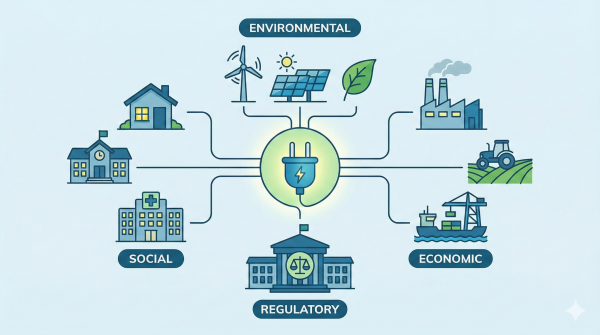
Electricity is a fundamental driver of social development, environmental sustainability, and economic growth in a country. It influences industrial productivity, agricultural efficiency, healthcare delivery, and overall quality of life. Because of its critical importance, governments worldwide establish strong regulatory frameworks to ensure reliable supply, fair pricing, and safe, sustainable practices.
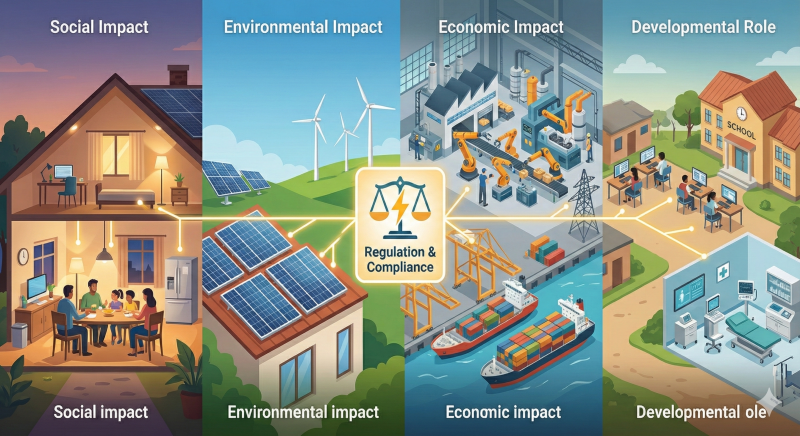
- Social Impact: Electricity provides households with lighting, communication, and modern amenities.
- Environmental Impact: Choice of energy sources affects pollution, carbon emissions, and climate change.
- Economic Impact: Reliable electricity boosts industrial output, trade competitiveness, and national GDP.
- Developmental Role: Access to electricity reduces poverty and promotes education, healthcare, and digital inclusion.
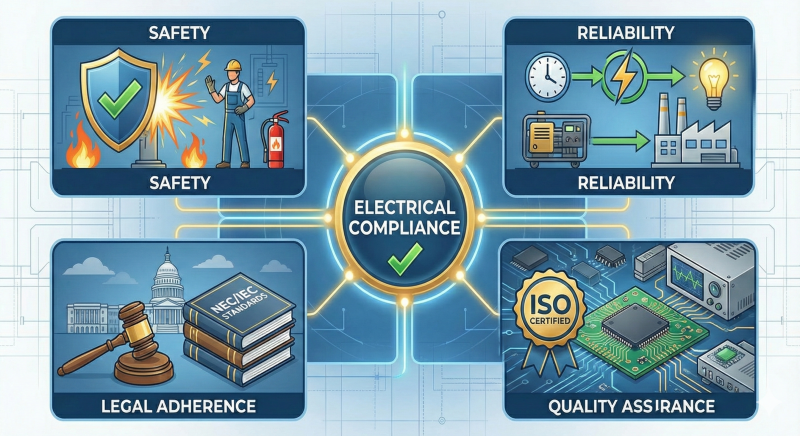
Electrical compliance means following all legal, technical, and safety rules when designing, installing, using, and maintaining electrical systems. It helps keep people safe and ensures everything works properly:
- Safety: Prevents electrical hazards like shocks, fires, and equipment damage.
- Reliability: Guarantees uninterrupted and efficient power supply.
- Legal Adherence: Meets statutory requirements under national and international regulations.
- Quality Assurance: Ensures equipment and installations conform to certified standards.
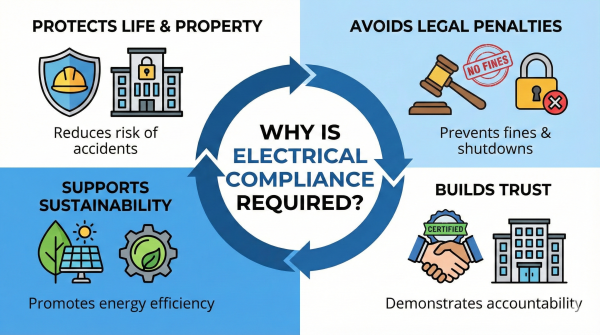
- Protects Life and Property: Reduces risk of accidents and fatalities.
- Avoids Legal Penalties: Non-compliance can lead to fines, shutdowns, or litigation.
- Supports Sustainability: Promotes energy efficiency and environmental responsibility.
- Builds Trust: Demonstrates professionalism and accountability in industrial and commercial operations.
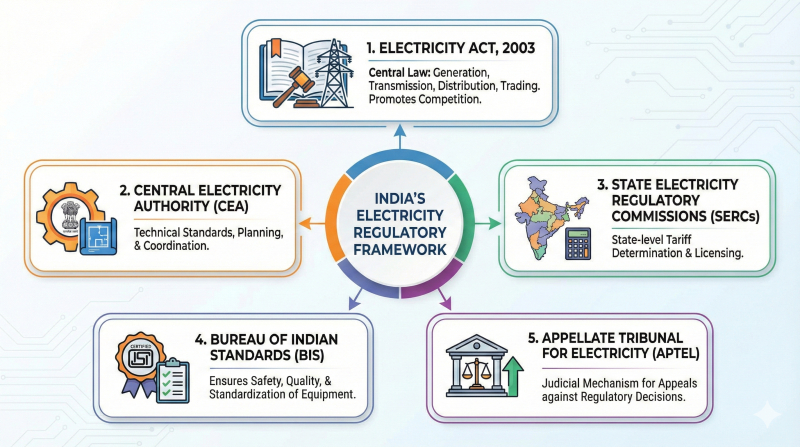
India’s electricity sector is governed by a multi-layered regulatory system:
- Electricity Act, 2003: Central legislation consolidating laws on generation, transmission, distribution, trading, and use of electricity. Promotes competition, transparency, and consumer protection.
- Central Electricity Authority (CEA): Responsible for technical standards, planning, and overall coordination of the power sector.
- State Electricity Regulatory Commissions (SERCs): Oversee tariff determination, licensing, and regulation at the state level.
- Bureau of Indian Standards (BIS): Ensures safety, quality, and standardization of electrical equipment and components.
- Appellate Tribunal for Electricity (APTEL): Provides a judicial mechanism for appeals against regulatory decisions.
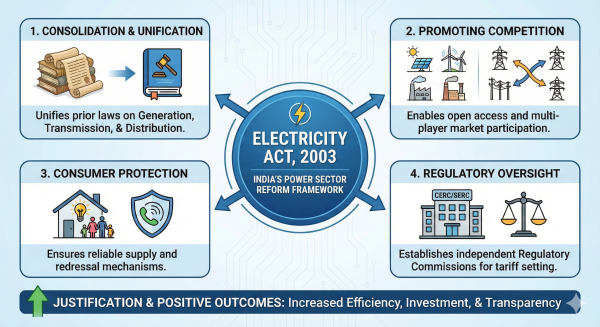
- Introduced open access, allowing consumers to choose their electricity supplier.
- Encouraged renewable energy integration and mandated promotion of non-conventional energy sources.
- Established APTEL to strengthen dispute resolution.
- Enhanced consumer rights by ensuring fair tariffs and reliable supply.
- Provided a framework for private sector participation in generation and distribution.
Electrical compliance is not just a legal requirement—it is a critical safeguard for safety, reliability, and sustainability. In India, the Electricity Act, 2003 and associated institutions ensure that power supply remains affordable, equitable, and future-ready. Continuous reforms are essential to address challenges like renewable integration, digitalization, and rising demand.
बिजली किसी देश में सामाजिक विकास, पर्यावरणीय स्थिरता और आर्थिक विकास का एक मौलिक चालक है। यह औद्योगिक उत्पादकता, कृषि दक्षता, स्वास्थ्य सेवा वितरण और जीवन की समग्र गुणवत्ता को प्रभावित करती है। इसके महत्वपूर्ण महत्व के कारण, दुनिया भर की सरकारें विश्वसनीय आपूर्ति, उचित मूल्य निर्धारण और सुरक्षित, टिकाऊ प्रथाओं को सुनिश्चित करने के लिए मजबूत नियामक ढांचे स्थापित करती हैं।
- सामाजिक प्रभाव: बिजली घरों को रोशनी, संचार और आधुनिक सुविधाएं प्रदान करती है।
- पर्यावरणीय प्रभाव: ऊर्जा स्रोतों का चयन प्रदूषण, कार्बन उत्सर्जन और जलवायु परिवर्तन को प्रभावित करता है।
- आर्थिक प्रभाव: विश्वसनीय बिजली औद्योगिक उत्पादन, व्यापार प्रतिस्पर्धा और राष्ट्रीय जीडीपी को बढ़ावा देती है।
- विकासात्मक भूमिका: बिजली तक पहुंच गरीबी को कम करती है और शिक्षा, स्वास्थ्य देखभाल और डिजिटल समावेशन को बढ़ावा देती है।
विद्युत अनुपालन का अर्थ है विद्युत प्रणालियों को डिजाइन, स्थापित, उपयोग और रखरखाव करते समय सभी कानूनी, तकनीकी और सुरक्षा नियमों का पालन करना। यह लोगों को सुरक्षित रखने में मदद करता है और यह सुनिश्चित करता है कि सब कुछ ठीक से काम करे:
- सुरक्षा: झटके, आग और उपकरणों की क्षति जैसे बिजली के खतरों को रोकता है।
- विश्वसनीयता: निर्बाध और कुशल बिजली आपूर्ति की गारंटी देता है।
- कानूनी पालन: राष्ट्रीय और अंतर्राष्ट्रीय नियमों के तहत वैधानिक आवश्यकताओं को पूरा करता है।
- गुणवत्ता आश्वासन: सुनिश्चित करता है कि उपकरण और इंस्टॉलेशन प्रमाणित मानकों के अनुरूप हैं।
- जीवन और संपत्ति की रक्षा करता है: दुर्घटनाओं और मौतों के जोखिम को कम करता है।
- कानूनी दंड से बचाता है: गैर-अनुपालन से जुर्माना, शटडाउन या मुकदमेबाजी हो सकती है।
- स्थिरता का समर्थन करता है: ऊर्जा दक्षता और पर्यावरणीय जिम्मेदारी को बढ़ावा देता है।
- विश्वास बनाता है: औद्योगिक और वाणिज्यिक संचालन में व्यावसायिकता और जवाबदेही प्रदर्शित करता है।
भारत का बिजली क्षेत्र एक बहुस्तरीय नियामक प्रणाली द्वारा शासित है:
- विद्युत अधिनियम, 2003: बिजली के उत्पादन, पारेषण, वितरण, व्यापार और उपयोग पर कानूनों को समेकित करने वाला केंद्रीय कानून। प्रतिस्पर्धा, पारदर्शिता और उपभोक्ता संरक्षण को बढ़ावा देता है।
- केंद्रीय विद्युत प्राधिकरण (CEA): तकनीकी मानकों, योजना और बिजली क्षेत्र के समग्र समन्वय के लिए जिम्मेदार।
- राज्य विद्युत नियामक आयोग (SERCs): राज्य स्तर पर टैरिफ निर्धारण, लाइसेंसिंग और विनियमन की निगरानी करते हैं।
- भारतीय मानक ब्यूरो (BIS): विद्युत उपकरणों और घटकों की सुरक्षा, गुणवत्ता और मानकीकरण सुनिश्चित करता है।
- विद्युत के लिए अपीलीय न्यायाधिकरण (APTEL): नियामक निर्णयों के खिलाफ अपील के लिए एक न्यायिक तंत्र प्रदान करता है।
- ओपन एक्सेस की शुरुआत की, जिससे उपभोक्ताओं को अपना बिजली आपूर्तिकर्ता चुनने की अनुमति मिली।
- अक्षय ऊर्जा एकीकरण को प्रोत्साहित किया और गैर-पारंपरिक ऊर्जा स्रोतों के प्रचार को अनिवार्य बनाया।
- विवाद समाधान को मजबूत करने के लिए APTEL की स्थापना की।
- उचित टैरिफ और विश्वसनीय आपूर्ति सुनिश्चित करके उपभोक्ता अधिकारों को बढ़ाया।
- उत्पादन और वितरण में निजी क्षेत्र की भागीदारी के लिए एक रूपरेखा प्रदान की।
विद्युत अनुपालन केवल एक कानूनी आवश्यकता नहीं है—यह सुरक्षा, विश्वसनीयता और स्थिरता के लिए एक महत्वपूर्ण सुरक्षा उपाय है। भारत में, विद्युत अधिनियम, 2003 और संबंधित संस्थान यह सुनिश्चित करते हैं कि बिजली की आपूर्ति सस्ती, न्यायसंगत और भविष्य के लिए तैयार रहे। अक्षय एकीकरण, डिजिटलीकरण और बढ़ती मांग जैसी चुनौतियों का समाधान करने के लिए निरंतर सुधार आवश्यक हैं।